

- 网站导航 -
Address: HOME > Blogs > Company News >
Clutch Pressure Plate Adjustment Tips for Consistent Pedal Feel
Time:2026-11-04 11:45:05 Author:Tusheng Clicks:63Second-rate
A clutch pedal that feels different from one week to the next is usually a sign that the pressure plate needs attention. Most modern hydraulic clutches are self-adjusting, but cable-actuated and heavy-duty linkage clutches still require periodic adjustment. Correct adjustment protects the pressure plate and keeps gear shifts smooth.
Why Adjustment Matters
If there is too little free play, the release bearing stays in contact with the diaphragm fingers, partially disengaging the clutch. That makes the pressure plate slip and wear out quickly. If there is too much free play, the clutch does not fully disengage, and gears grind when shifting. Both extremes shorten clutch life.
Check the Free Play
With the engine off, press the pedal gently until you feel resistance. The distance before resistance begins is the free play. It should match the vehicle specification, usually a small amount at the top of travel. Measure it with a ruler at the pedal pad and compare it to the shop manual.
Adjust the Cable or Linkage
For cable clutches, turn the adjusting nut at the transmission end until the specified free play is achieved. For hydraulic systems, check the fluid level and bleed any air; hydraulic clutches should maintain adjustment automatically. If a hydraulic clutch needs frequent adjustment, there is an internal leak in the slave or master cylinder.
Watch the Diaphragm Fingers
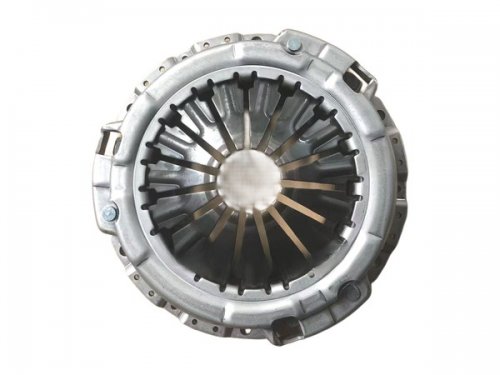
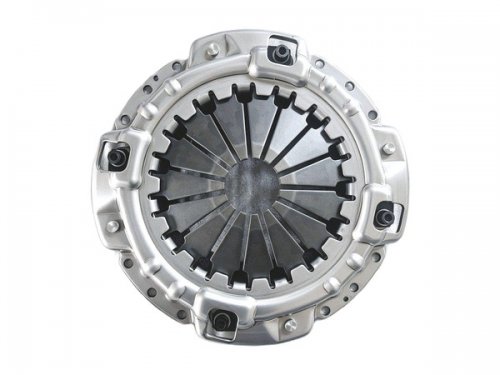
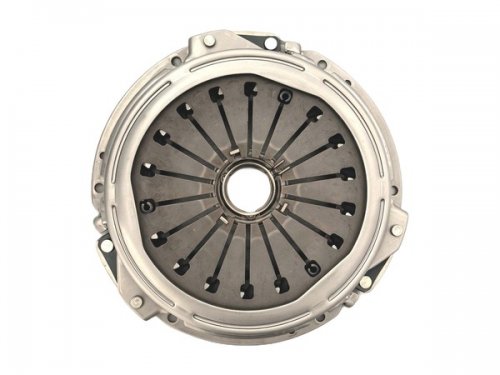
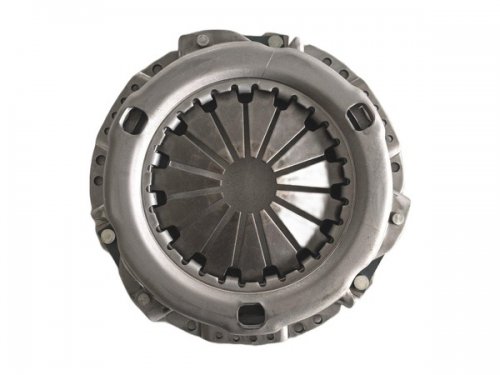
If the gearbox is already out for service, measure the height of the diaphragm fingers. They must be perfectly flat and at the same height. Uneven fingers mean the pressure plate is worn or warped, and no adjustment will fix the engagement problem. Replace the plate.
Test After Adjustment
After adjusting, start the engine, press the clutch and shift into first gear. The truck should not creep forward, and gears should engage without grinding. Take it on a short test drive and confirm the pedal feels consistent at every stop. Recheck the free play after a few hundred kilometers as the new parts seat.
References
CLOUGH R W. The clutch pressure plate in heavy-duty automotive transmission systems[J]. Proceedings of the Institution of Mechanical Engineers, Part D, 2019, 233(5): 1245-1258.
Nakamura, Takeshi. "Optimization of Clutch Cushion Spring Design for Noise Reduction." SAE International Journal of Passenger Cars, vol. 13, no. 3, 2020, pp. 289-297.
Zhang, Y., Li, X., and Wang, H. (2021). Optimization of clutch pressure plate diaphragm spring performance for commercial vehicles. Chinese Journal of Mechanical Engineering, 34(2), 45-53.






Contact
E-mail:tusheng965@gmail.com
whatsApp:8613012022227
Tel:8615932726000
URL:https://www.tushengautoparts.com
Address:No. 072, 1st Street, Auto Parts Market, Migezhuang Village, Migezhuang Town, Hejian City, Cangzhou City, Hebei Province