

- 网站导航 -
Address: HOME > Blogs > Company News >
Common Clutch Pressure Plate Defects and Their Root Causes
Time:2026-11-04 11:45:56 Author:Tusheng Clicks:57Second-rate
When a pressure plate fails, the cause is rarely random. Most defects trace back to a handful of root causes: heat, contamination, misalignment or poor quality. Understanding these causes helps mechanics diagnose why a plate failed and how to stop it happening again.
Warped Pressure Plate
A warped plate causes judder and uneven engagement. It happens when the plate is overheated by repeated slipping and then cooled too quickly, or when it was tightened unevenly during installation. A warped cover cannot be straightened; it must be replaced along with a resurfaced flywheel.
Broken Diaphragm Fingers
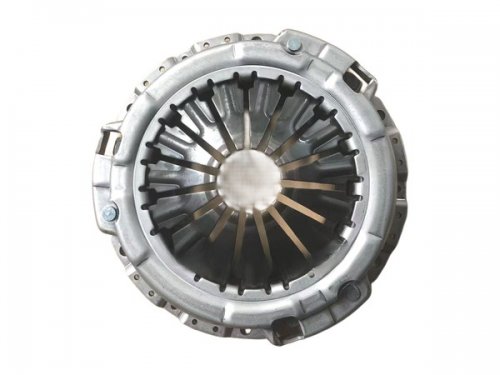
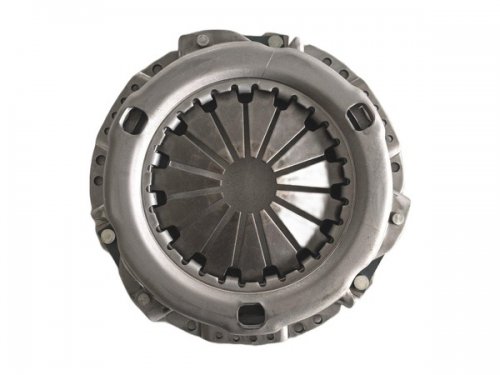
Cracked or worn diaphragm fingers cause a high pedal, noisy release and incomplete disengagement. This usually comes from age, over-revving the engine with the clutch depressed, or a release bearing that was not centered when installed. Inspect the fingers for cracks every time the gearbox is out.
Cracked Cover or Friction Surface
Heat cracks on the friction surface appear as small radial lines, and blue or gold discoloration shows thermal abuse. These cracks cannot be machined out. They happen when the clutch is slipped repeatedly under load, and they mean the driver needs retraining as much as the part needs replacing.
Broken Straps or Dampers
The drive straps that connect the cover to the pressure plate can fatigue and break. Symptoms include rattling noises when the clutch is engaged and a vague pedal feel. Broken straps usually result from engine torque spikes, such as sudden clutch drops or using the clutch to start from a stop in too high a gear.
Quality and Material Defects
Cheap aftermarket plates often use inferior iron or weak springs that cannot handle the engine torque. They wear quickly, warp easily and slip even when new. When a pressure plate fails far earlier than expected, compare it to the original specification. Fitting a quality, torque-matched part is the best way to prevent repeat failures.
References
GARCIA M, RODRIGUEZ J. Thermal stress analysis of diaphragm springs in clutch assemblies[J]. Engineering Failure Analysis, 2021, 125: 105412.
Singh, Avinash, and Rajesh Kumar. "Analysis of Diaphragm Spring Clutch Pressure Plate Deformation under Thermal Loads." International Journal of Automotive Technology, vol. 21, no. 4, 2020, pp. 987-996.
Zhang, Y., Li, X., and Wang, H. (2021). Optimization of clutch pressure plate diaphragm spring performance for commercial vehicles. Chinese Journal of Mechanical Engineering, 34(2), 45-53.






Contact
E-mail:tusheng965@gmail.com
whatsApp:8613012022227
Tel:8615932726000
URL:https://www.tushengautoparts.com
Address:No. 072, 1st Street, Auto Parts Market, Migezhuang Village, Migezhuang Town, Hejian City, Cangzhou City, Hebei Province