

- 网站导航 -
Address: HOME > Blogs > Company News >
Diaphragm Spring vs Coil Spring Pressure Plates Compared
Time:2026-11-04 11:43:39 Author:Tusheng Clicks:133Second-rate
Inside every clutch pressure plate, a spring pushes the friction disc against the flywheel. That spring comes in two basic forms: the diaphragm spring and the coil spring. Each design suits a different vehicle and duty cycle, and choosing between them changes pedal feel, clamping force and clutch life.
Diaphragm Spring Pressure Plates
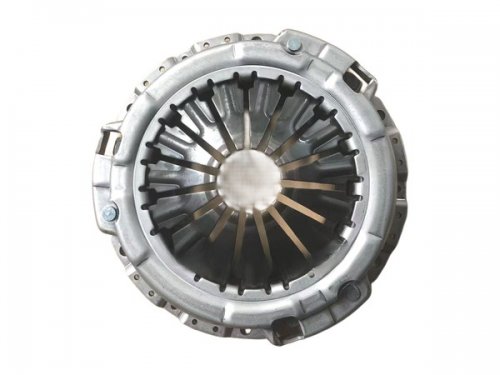
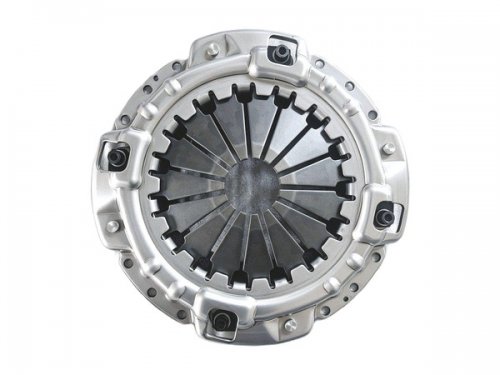
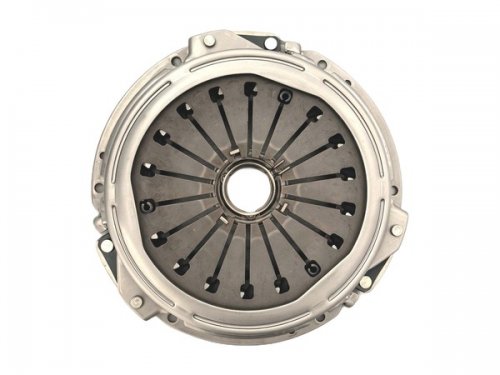
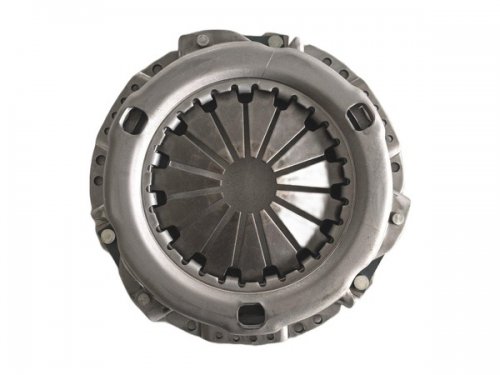
The diaphragm spring is a single disc-shaped steel spring with slots and fingers radiating from the center. When you press the clutch, the release bearing pushes on the fingers, which lever the pressure plate away from the flywheel. Diaphragm plates are light, compact and provide consistent clamping force as the lining wears. They are the standard on most modern cars, vans and light trucks.
Coil Spring Pressure Plates
Coil spring plates use several conventional coil springs arranged around the cover to push the pressure plate. They are stronger and more tolerant of extreme heat and abuse, which is why they are found on heavy trucks, buses, construction vehicles and high-torque engines. They are bulkier and heavier, and pedal effort is generally higher.
Clamping Force and Wear
A diaphragm spring naturally maintains clamping force as the lining wears, because its leverage changes shape to compensate. Coil springs lose force as they compress, meaning a worn coil clutch clamps less firmly and starts to slip. For vehicles that run close to their torque limit, this difference matters.
Pedal Feel
Diaphragm clutches are lighter and smoother to operate, which is why they dominate passenger vehicles. Coil spring clutches require more pedal effort and can feel heavier, but that extra pressure is what holds a heavy load. Drivers of vocational trucks rarely complain about the effort because the durability is worth it.
Which One to Choose
Match the design to the application. Light vehicles and highway trucks use diaphragm springs for smoothness. Heavy, high-torque, off-highway or constantly loaded vehicles need the raw strength of coil springs. Never upgrade a coil-spring clutch to a diaphragm type on a heavy engine; the clamping force will not be enough.
References
GARCIA M, RODRIGUEZ J. Thermal stress analysis of diaphragm springs in clutch assemblies[J]. Engineering Failure Analysis, 2021, 125: 105412.
Singh, Avinash, and Rajesh Kumar. "Analysis of Diaphragm Spring Clutch Pressure Plate Deformation under Thermal Loads." International Journal of Automotive Technology, vol. 21, no. 4, 2020, pp. 987-996.
Zhang, Y., Li, X., and Wang, H. (2021). Optimization of clutch pressure plate diaphragm spring performance for commercial vehicles. Chinese Journal of Mechanical Engineering, 34(2), 45-53.






Contact
E-mail:tusheng965@gmail.com
whatsApp:8613012022227
Tel:8615932726000
URL:https://www.tushengautoparts.com
Address:No. 072, 1st Street, Auto Parts Market, Migezhuang Village, Migezhuang Town, Hejian City, Cangzhou City, Hebei Province