

- 网站导航 -
Address: HOME > Blogs > Company News >
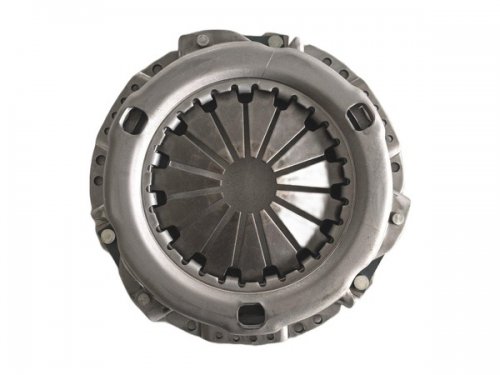
Clutch Pressure Plate Replacement: Step by Step
Time:2026-11-04 11:38:26 Author:Tusheng Clicks:180Second-rate
Replacing a clutch pressure plate is a precise job, not a bolt-torque exercise. Done correctly, a new clutch lasts hundreds of thousands of kilometers. Done poorly, it slips, judders or fails within weeks. Following the right sequence is what separates a professional repair from a comeback job.
Remove the Transmission
Support the engine, disconnect the clutch linkage and slave cylinder, then unbolt the gearbox from the bell housing. Lower it carefully so the input shaft does not catch on the clutch disc. Once the gearbox is out, mark the position of the old pressure plate on the flywheel for reference.
Remove the Old Plate
Loosen the pressure plate bolts diagonally, a little at a time, to avoid warping the cover. Catch the clutch disc as it drops, and inspect the flywheel surface for heat cracks, blue discoloration or deep grooves. Any of these means the flywheel must be machined or replaced before the new parts go in.
Check the Pilot Bearing
With the assembly removed, inspect the pilot bearing or bushing in the center of the crankshaft. If it is rough, dry or noisy, replace it now. Reaching this bearing later means pulling the gearbox out all over again.
Install with an Alignment Tool
Fit the new clutch disc onto a clutch alignment tool, then set the new pressure plate over it. Align the marks, start all bolts by hand, then tighten them in a diagonal sequence to the manufacturer's torque specification. The alignment tool centers the disc on the input shaft; removing it before installation guarantees the gearbox will never go in.
Bleed and Break In
Reinstall the gearbox, reconnect the linkage and slave cylinder, then bleed the hydraulic system until the pedal feels firm. Break in the new clutch by driving gently for the first several hundred kilometers, avoiding full-throttle starts. This lets the friction material seat properly and prevents early slippage.
References
CLOUGH R W. The clutch pressure plate in heavy-duty automotive transmission systems[J]. Proceedings of the Institution of Mechanical Engineers, Part D, 2019, 233(5): 1245-1258.
Nakamura, Takeshi. "Optimization of Clutch Cushion Spring Design for Noise Reduction." SAE International Journal of Passenger Cars, vol. 13, no. 3, 2020, pp. 289-297.
Zhang, Y., Li, X., and Wang, H. (2021). Optimization of clutch pressure plate diaphragm spring performance for commercial vehicles. Chinese Journal of Mechanical Engineering, 34(2), 45-53.






Contact
E-mail:tusheng965@gmail.com
whatsApp:8613012022227
Tel:8615932726000
URL:https://www.tushengautoparts.com
Address:No. 072, 1st Street, Auto Parts Market, Migezhuang Village, Migezhuang Town, Hejian City, Cangzhou City, Hebei Province