

- 网站导航 -
Address: HOME > Blogs > Company News >
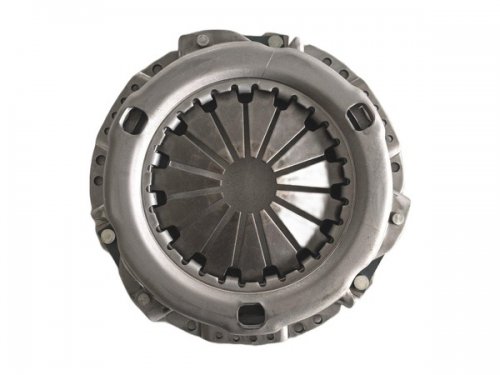
Cast Iron vs Ductile Iron Pressure Plates: Which Material Lasts Longer
Time:2026-11-04 11:40:41 Author:Tusheng Clicks:159Second-rate
The material of a clutch pressure plate determines how well it handles heat, how long it resists wear and how smoothly it engages. Most modern heavy-duty plates use either grey cast iron or ductile iron, and each has clear advantages depending on the application.
Grey Cast Iron
Grey cast iron has been the standard pressure plate material for decades. It absorbs vibration well, machines to a flat surface easily and has good friction characteristics against organic linings. It is quieter and cheaper, but it is brittle and can crack under extreme thermal shock, such as a very hard pull on a steep grade.
Ductile Iron
Ductile iron contains nodular graphite, which makes it far stronger and more flexible than grey iron. It resists cracking under high heat and heavy loads, making it the preferred choice for performance and vocational applications. Ductile iron plates handle repeated hard launches without warping, though they cost more and can transmit more vibration.
Heat Handling
The pressure plate must dissipate the heat generated every time the clutch slips. Grey cast iron spreads heat well but weakens when overheated repeatedly. Ductile iron retains its strength at higher temperatures and is less likely to warp after prolonged heat exposure. For trucks that constantly start under load, ductile iron is the safer long-term choice.
Weight and Fuel Economy
Ductile iron can be cast thinner while retaining strength, which can reduce overall clutch weight. Lighter rotating mass means quicker engine response and slightly better fuel economy. However, the difference is modest and should not be the deciding factor for most fleet buyers.
Choose by Application
Normal highway trucks are well served by a quality grey cast iron plate. Dump trucks, tow trucks, buses and any vehicle that operates under repeated heavy starts benefit from ductile iron. Always match the plate material to the lining and the duty cycle, and never fit a cheap aftermarket plate on a high-torque engine.
References
CLOUGH R W. The clutch pressure plate in heavy-duty automotive transmission systems[J]. Proceedings of the Institution of Mechanical Engineers, Part D, 2019, 233(5): 1245-1258.
Nakamura, Takeshi. "Optimization of Clutch Cushion Spring Design for Noise Reduction." SAE International Journal of Passenger Cars, vol. 13, no. 3, 2020, pp. 289-297.
Zhang, Y., Li, X., and Wang, H. (2021). Optimization of clutch pressure plate diaphragm spring performance for commercial vehicles. Chinese Journal of Mechanical Engineering, 34(2), 45-53.






Contact
E-mail:tusheng965@gmail.com
whatsApp:8613012022227
Tel:8615932726000
URL:https://www.tushengautoparts.com
Address:No. 072, 1st Street, Auto Parts Market, Migezhuang Village, Migezhuang Town, Hejian City, Cangzhou City, Hebei Province