

- 网站导航 -
Address: HOME > Blogs > Industry News >
What Is a Clutch Plate and How Does It Work in a Manual Transmission
Time:2026-11-04 11:34:27 Author:Tusheng Clicks:168Second-rate
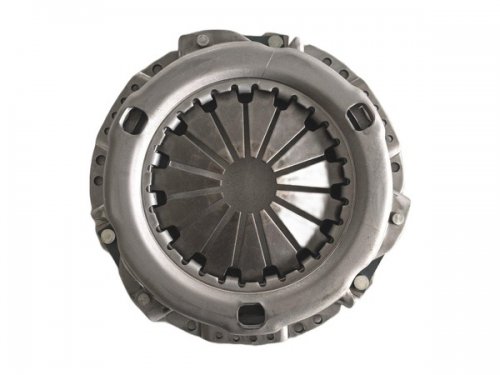
The clutch plate, also called the clutch disc, is the friction component that sits between the engine flywheel and the pressure plate. Every time you press or release the clutch pedal, this plate engages or disengages the engine from the transmission. For commercial vehicles carrying heavy loads, the condition of the clutch plate directly determines whether the truck can start smoothly, shift gears cleanly and deliver power without loss.
What Is a Clutch Plate Made Of?
A typical clutch plate consists of a central splined hub, a steel disc and two friction linings bonded or riveted to both sides. The friction material is usually organic, ceramic or a blend designed to balance grip, wear resistance and smooth engagement. Many plates also include torsion springs between the hub and the disc to dampen engine vibrations and prevent gear rattle.
How Does the Clutch Plate Work?
When the clutch is engaged, the pressure plate clamps the friction disc tightly against the flywheel. The friction linings grip both surfaces, locking the disc to the flywheel so engine torque flows through the splined hub to the transmission input shaft. When the pedal is pressed, the pressure plate retracts and the disc is released, breaking the torque connection so gears can be changed without grinding.
Where Is It Located?
The clutch plate is mounted on the input shaft of the gearbox, inside the clutch bell housing, sandwiched between the flywheel and the pressure plate. Its center splines match the input shaft, allowing it to slide slightly as the clutch engages. Because it operates in a sealed housing, it relies on engineered friction material rather than oil for lubrication, which is why heat management is critical to its life.
Why Clutch Plates Wear Out
Friction always produces heat and wear. Riding the clutch, frequent half-clutch starts, overloading the vehicle and dragging a trailer above capacity all accelerate lining wear. As the lining thins, the rivets can dig into the flywheel, causing damage that requires resurfacing or replacement. Oil contamination from a leaking rear main seal also ruins the friction surface instantly.
When to Replace It
Replace the clutch plate when you notice slipping, judder, a burning smell, difficulty engaging gears or a clutch pedal that bites very high. Best practice is to replace the plate, pressure plate and release bearing together as a matched kit, and to resurface or replace the flywheel at the same time. Installing a new plate on a worn flywheel shortens the life of both parts.
References
LEE H, PARK S. Friction material degradation in heavy-duty clutch discs under repeated engagement cycles[J]. Wear, 2020, 452-453: 203298.
Garcia, Miguel, and Jose Martinez. "Thermal Analysis of a Ceramic Friction Clutch Plate Under Heavy Load." Tribology International, vol. 148, 2020, pp. 106-115.
Kim, J., and Park, S. (2019). Dynamic modeling of clutch judder caused by friction lining degradation. Journal of Mechanical Science and Technology, 33(8), 3621-3630.






Contact
E-mail:tusheng965@gmail.com
whatsApp:8613012022227
Tel:8615932726000
URL:https://www.tushengautoparts.com
Address:No. 072, 1st Street, Auto Parts Market, Migezhuang Village, Migezhuang Town, Hejian City, Cangzhou City, Hebei Province