

- 网站导航 -
Address: HOME > Blogs > Company News >
Clutch Pressure Plate: Components, Working Principle and Common Faults You Should Know
Time:2026-11-04 11:19:11 Author:Tusheng Clicks:81Second-rate
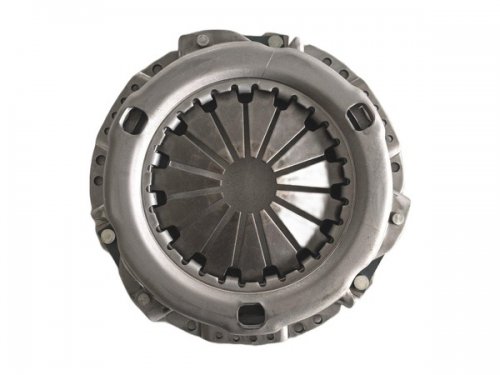
The clutch pressure plate is one of the most critical components in a manual transmission system, transferring engine torque to the gearbox while allowing smooth engagement and disengagement. For commercial vehicles, trucks and buses that operate under heavy load, a reliable pressure plate directly affects driving safety, fuel economy and clutch service life.
What Is a Clutch Pressure Plate?
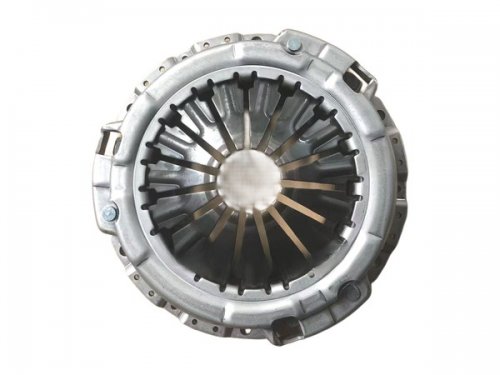
The clutch pressure plate is a bolted assembly mounted on the flywheel. It clamps the clutch disc between its diaphragm spring and the flywheel, locking the engine and transmission together so torque can flow. When the driver presses the clutch pedal, a release bearing pushes on the diaphragm spring fingers, lifting the pressure plate and interrupting power flow so the driver can shift gears.
How Does It Work?
When the clutch is engaged, the diaphragm spring exerts a strong axial force that presses the pressure plate against the friction disc. The resulting friction force transmits engine torque to the input shaft. When disengaged, the release bearing overcomes the spring force, the pressure plate retracts, and the friction disc is released. Repeated engagement generates significant heat, so modern pressure plates are fitted with cooling fins and usually made from high-strength cast iron or ductile iron to resist thermal deformation and wear.
Main Types of Pressure Plates
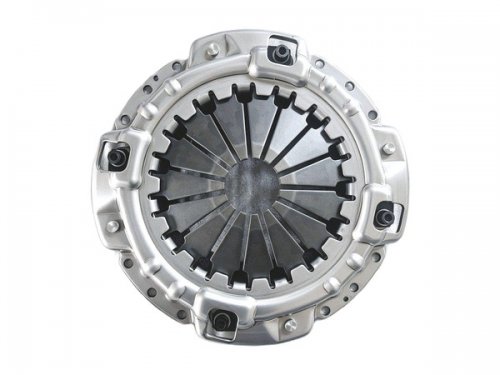
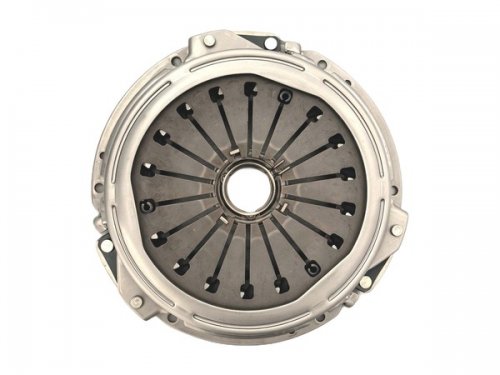
Most pressure plates fall into two designs: the diaphragm spring type and the coil spring type. Diaphragm spring pressure plates are widely used in passenger cars and light commercial vehicles because they offer consistent clamping force, lighter weight and self-adjusting characteristics. Coil spring pressure plates are common in heavy trucks, buses and off-highway machinery, where higher torque capacity and durability under extreme conditions are required.
Common Signs of Failure
A worn or damaged pressure plate usually shows clear symptoms. These include clutch slippage, where engine speed rises without matching vehicle acceleration, grabbing or juddering when pulling away, a stiff or spongy clutch pedal, unusual chirping or rattling noises, and difficulty engaging gears. Because the pressure plate works closely with the clutch disc and release bearing, these components should always be inspected and replaced together to avoid premature failure.
Maintenance Tips
To extend clutch life, drivers should avoid riding the clutch and unnecessary half-clutch operation, keep the release bearing and fork properly adjusted, and ensure the flywheel surface is flat and free of cracks before installation. When replacing a pressure plate, always follow the correct torque specification and tighten the mounting bolts in a diagonal sequence. Choosing a pressure plate matched to the engine torque and vehicle application is the most important step in preventing repeat failures.
References
CLOUGH R W. The clutch pressure plate in heavy-duty automotive transmission systems[J]. Proceedings of the Institution of Mechanical Engineers, Part D: Journal of Automobile Engineering, 2019, 233(5): 1245-1258.
Singh, Avinash, and Rajesh Kumar. "Analysis of Diaphragm Spring Clutch Pressure Plate Deformation under Thermal Loads." International Journal of Automotive Technology, vol. 21, no. 4, 2020, pp. 987-996.
Zhang, Y., Li, X., and Wang, H. (2021). Optimization of clutch pressure plate diaphragm spring performance for commercial vehicles. Chinese Journal of Mechanical Engineering, 34(2), 45-53.






Contact
E-mail:tusheng965@gmail.com
whatsApp:8613012022227
Tel:8615932726000
URL:https://www.tushengautoparts.com
Address:No. 072, 1st Street, Auto Parts Market, Migezhuang Village, Migezhuang Town, Hejian City, Cangzhou City, Hebei Province